Research & development work

Computational research from molecular principles to scientific applications.

My work combines molecular dynamics, quantum mechanics, free-energy methods, force-field development, and coarse-grained modeling to address questions in drug discovery, drug delivery, materials, green chemistry, and biomedical engineering.

2021–2022 · University of Texas at Dallas

Postdoctoral Research Associate

Two main computational research projects focused on cancer therapeutics and bio-based ionic liquids.

Postdoctoral research portfolio

University of Texas at Dallas · Computational chemistry, biophysics, and force-field development.

June 2021 – August 2022
Drug discovery

Breast-cancer therapeutics and ubiquitination machinery

Investigated molecular mechanisms relevant to breast-cancer therapeutic discovery, including BRCA protein and nucleosomal histone dynamics, post-translational modifications, and protein–ligand interactions.

Molecular dynamicsFree-energy perturbationUmbrella samplingAMBERPROTACsPTMs
  • Applied molecular dynamics and free-energy approaches to characterize conformational dynamics and molecular interactions.
  • Studied BRCA-associated protein and nucleosomal histone dynamics in relation to regulation of ubiquitination machinery.
  • Explored PROTACs and post-translational modifications as molecular mechanisms relevant to therapeutic design.
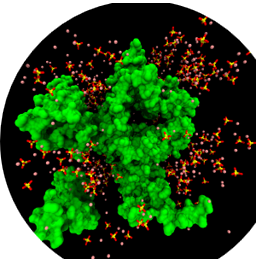
Protein and ligand molecular visualization
Green chemistry and drug delivery

Bio-based ionic liquids and AMOEBA force fields

Designed bio-based ionic liquids and developed AMOEBA polarizable force fields to model their molecular behavior and predict properties relevant to drug delivery and green-chemistry applications.

AMOEBAPolarizable force fieldsMolecular dynamicsQuantum mechanicsProperty prediction
  • Developed and applied AMOEBA polarizable force fields for bio-based ionic-liquid systems.
  • Combined molecular dynamics and quantum-mechanical calculations to understand structure and interactions.
  • Predicted physicochemical properties relevant to pharmaceutical delivery and sustainable chemical design.
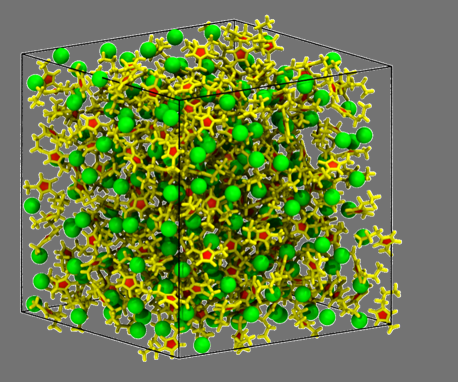
Molecular simulation box visualization
2016–2021 · University of Texas at Dallas

Research Assistant

Eight main computational research projects spanning molecular delivery, materials, nanotechnology, polymer systems, and interfacial phenomena.

Computational research portfolio

University of Texas at Dallas · Molecular simulation, enhanced sampling, free-energy methods, and scientific software.

August 2016 – May 2021
Drug design and delivery

Implant osseointegration in diabetic conditions

Used molecular dynamics to investigate a drug-delivery approach intended to induce implant osseointegration in diabetic conditions, with an emphasis on HMGB1 delivery and titanium-surface interactions.

Molecular dynamicsEnhanced samplingProtein bindingTitanium surfacesIonic-liquid coatings
  • Designed structural isoforms of HMGB1 and studied pre-delivery and post-implantation release scenarios.
  • Evaluated free-energy profiles of protein folding and protein-binding free energies with enhanced-sampling methods.
  • Studied the influence of ions and water on drug adsorption induced by titanium-implant surface modifications.
  • Characterized dicationic imidazolium-based ionic-liquid coatings on titanium surfaces for HMGB1 drug delivery.
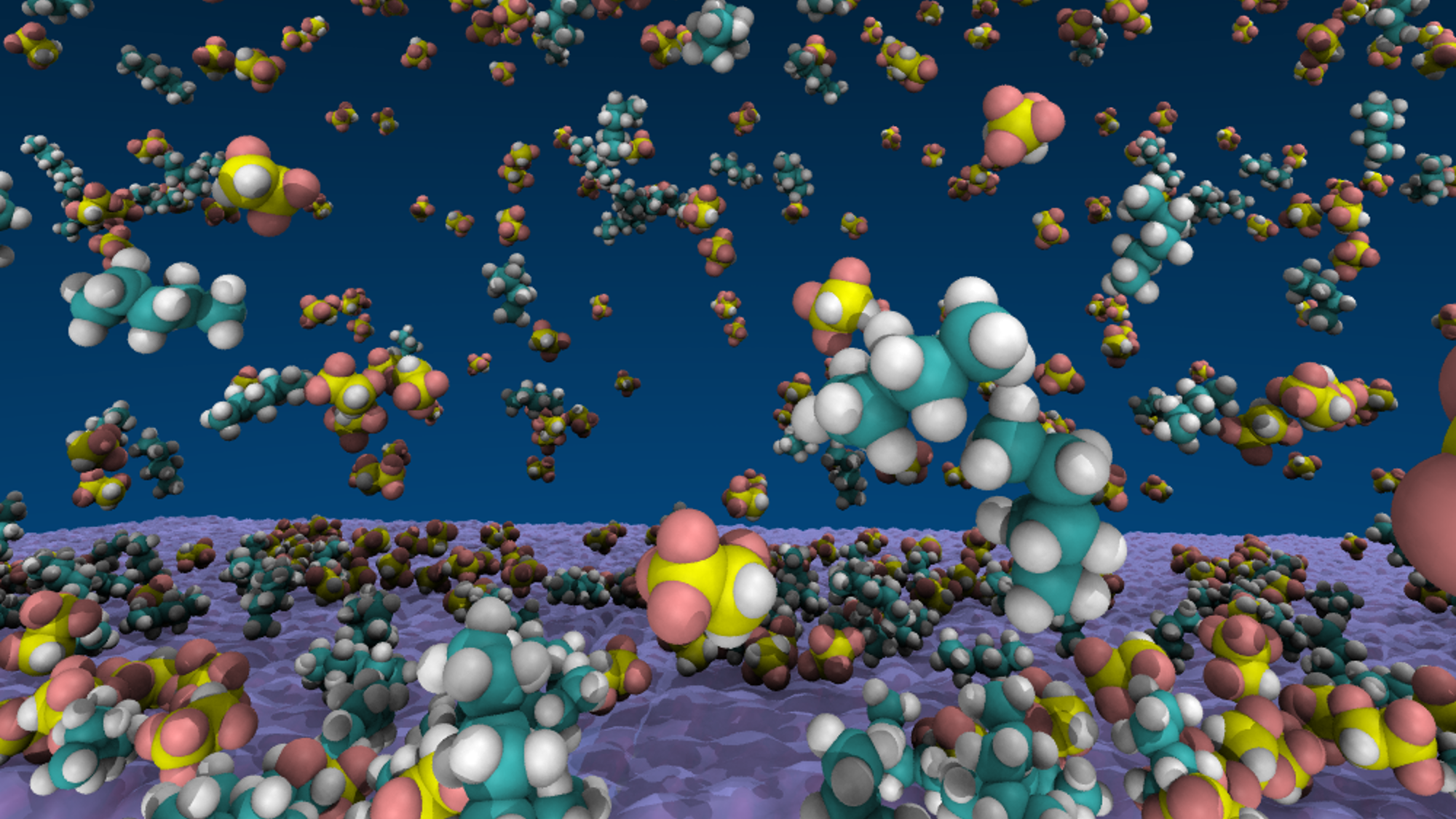
Molecular simulation of molecules near an interface
Oncology drug development

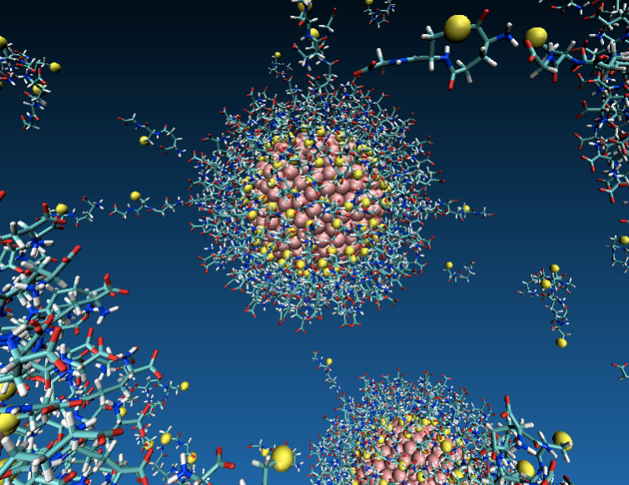
Glutathione-coated gold nanoparticles

Investigated glutathione-coated gold nanoparticles for cancer-related imaging and diagnosis applications.

  • Probed the effect of pH on the organization of TAMRA-conjugated glutathione on gold nanoparticles.
  • Evaluated free-energy profiles using umbrella sampling, metadynamics, ABF, and SMD for tumor diagnosis and kidney functional imaging.
Molecular recognition

Polyvinylpyrrolidone fluorescent sensors

Performed in silico modeling of polyvinylpyrrolidone as an anion-responsive fluorescent polymer for molecular recognition in water.

Polymer modelingFluorescenceMolecular recognition
Drug encapsulation

Protein folding pathways

Studied protein-folding pathways using the self-organized polymer-side-chain model to inform safe drug-encapsulation approaches.

  • Applied coarse-grained molecular dynamics.
  • Edited LAMMPS source code to support the simulation workflow.
Surfaces and interfaces

Water and refrigerant condensation

Investigated how surface chemistry and wettability influence condensation processes relevant to water harvesting, desalination, thermal management, and air-conditioning systems.

  • Modeled surfaces with tunable wettability to study water condensation.
  • Studied ultralow-surface-tension refrigerant-fluid condensation on self-assembled monolayer surfaces.
Materials and manufacturing

Laser-activated nanomaterials

Investigated how chemistry affects interactions between ultrafast pulsed laser-activated nanomaterials for biomedical devices and nanostructure manufacturing using molecular dynamics.

NanomaterialsMolecular dynamicsBiomedical devices
Ionic-liquid properties

Thermophysical-property prediction

Predicted thermophysical properties of novel ionic liquids using molecular dynamics and ab initio quantum-mechanical methods.

Molecular dynamicsAb initio QMIonic liquids
These projects connected molecular-scale properties and interactions to practical questions in drug delivery, implant design, diagnostics, nanomaterials, water management, and thermal systems.
2012–2013 · University of Peradeniya, Sri Lanka

Undergraduate Research Assistant

Early computational and experimental research in topical drug-development systems.

Topical drug development

Drug-administered skincare products

Conducted theoretical studies on drug-administered skincare products using molecular dynamics simulations. Developed triolein and beta-carotene models based on SDK coarse-grained force fields.

Molecular dynamicsSDK coarse-grained force fieldsTrioleinBeta-caroteneTopical delivery
Molecular assembly visualization